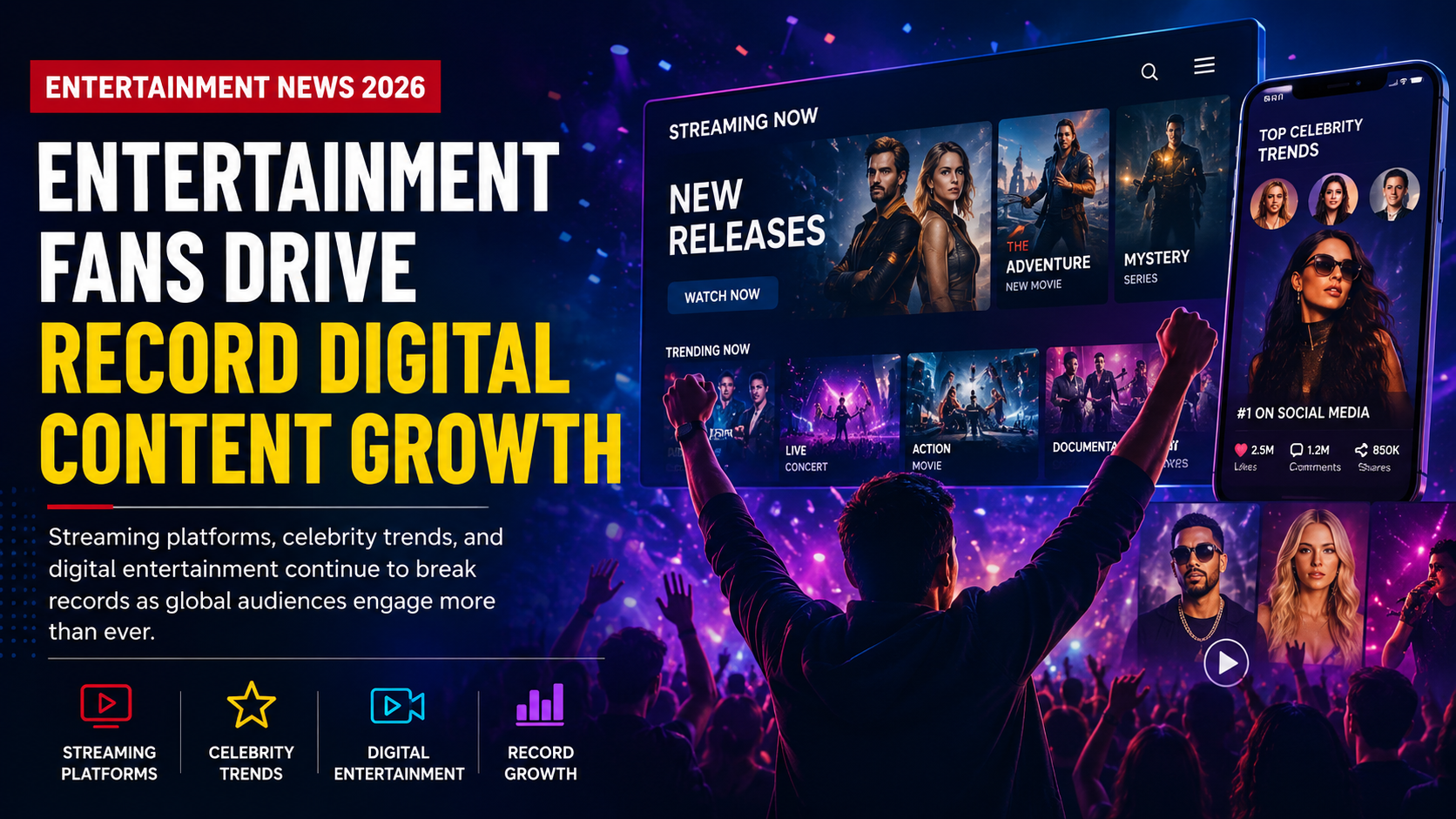
The entertainment industry is experiencing significant growth in 2026 as audiences continue spending more time consuming digital content across streaming platforms, social media, music services, and online video platforms. Entertainment companies are investing heavily in new productions, celebrity collaborations, and digital experiences to capture audience attention in an increasingly competitive market.
Streaming services remain one of the biggest forces shaping modern entertainment. Millions of viewers are choosing online platforms over traditional television, leading entertainment companies to release more exclusive series, movies, and live events digitally. This shift has created intense competition among streaming providers aiming to attract subscribers with original and high-quality content.
Celebrity culture also continues to play a major role in entertainment trends. Actors, musicians, influencers, and online creators are gaining massive followings through social media platforms where fans interact with them daily. Entertainment brands are using celebrity partnerships to increase visibility, promote projects, and strengthen audience engagement worldwide.
The music industry is also evolving rapidly. Digital streaming platforms have transformed how people listen to music, allowing artists to reach global audiences instantly. Music concerts and international tours are returning strongly in 2026, with fans showing increased interest in live entertainment experiences after years of digital-only interaction.
Film studios are investing larger budgets into blockbuster productions and franchise-based storytelling. Action films, science fiction, fantasy, and biographical dramas continue attracting strong audience interest across theaters and streaming platforms. Experts believe global demand for entertainment content will continue increasing throughout the year.
Social media platforms are becoming powerful entertainment hubs as short-form videos, live streams, and creator content attract billions of daily views. Content creators are building large online communities and generating significant revenue through sponsorships, advertising, and fan subscriptions. Many entertainment companies are now collaborating directly with digital influencers to reach younger audiences.
Gaming and interactive entertainment are also contributing to industry growth. Video games, virtual reality experiences, and esports competitions are attracting massive audiences worldwide. Entertainment experts say gaming has become one of the most profitable sectors within the broader entertainment market.
Technology is changing how entertainment content is produced and distributed. Artificial intelligence, advanced visual effects, and virtual production systems are helping studios create higher-quality experiences while reducing production time. Businesses within the entertainment industry are focusing on innovation to stay competitive in rapidly changing digital markets.
Despite strong growth, the industry still faces challenges including rising production costs, copyright concerns, and intense competition for audience attention. Entertainment companies are continuously experimenting with new formats, storytelling methods, and subscription models to maintain profitability.
Industry analysts predict entertainment spending will continue rising as consumers demand more personalized and accessible content experiences. Businesses are expanding into international markets and producing multilingual content to attract wider global audiences.
As entertainment continues evolving, digital platforms, celebrity influence, and technological innovation are expected to remain key drivers of industry success. In 2026, entertainment has become more global, interactive, and digitally connected than ever before.